Basic Music Theory for Sound Healers
Why Understanding the Language of Sound
Makes You a Better Intuitive Player
By Anna Caldwell - Yoga, Sound Healing & Meditation Online and Mallorca, Spain
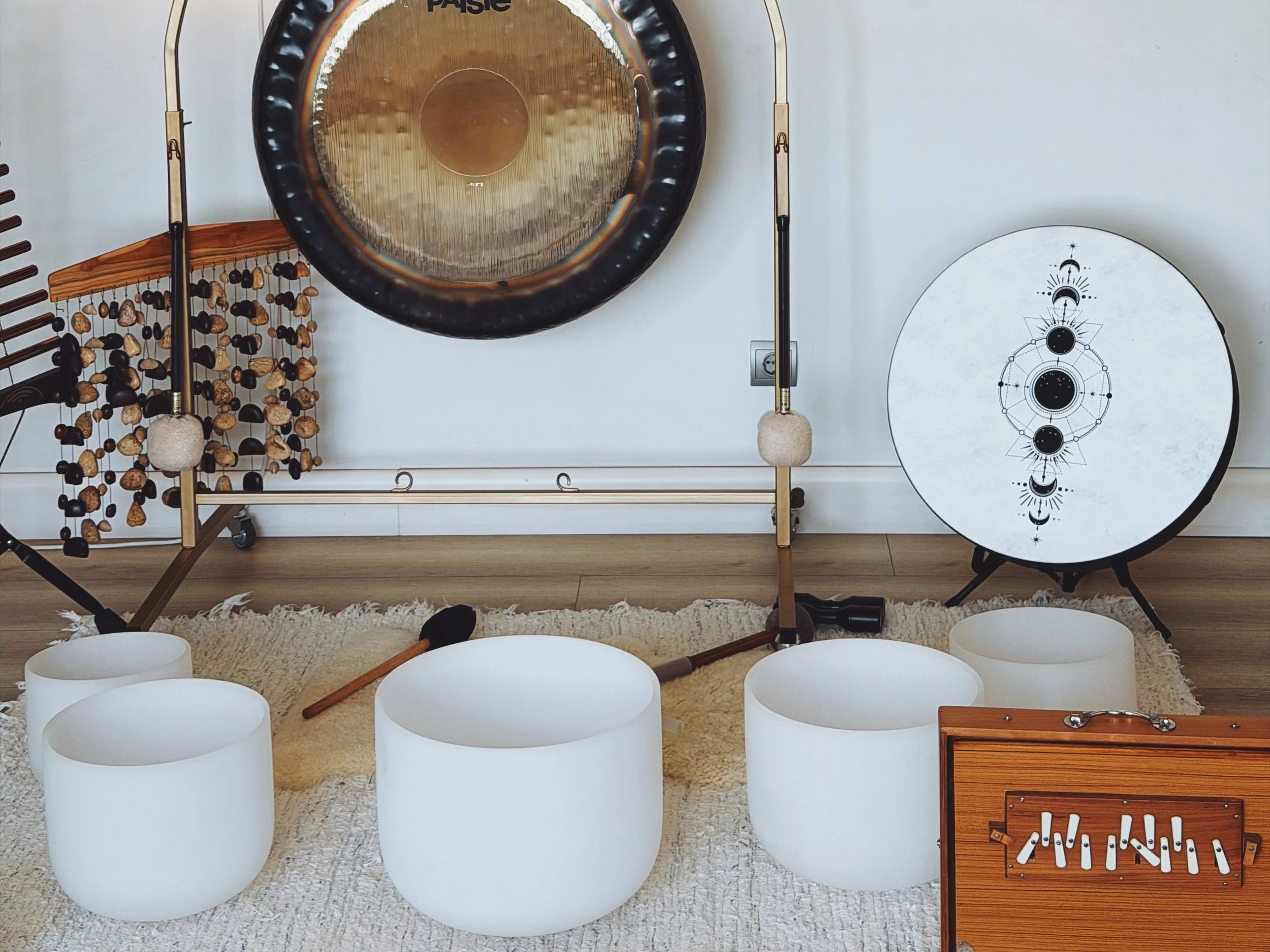
I grew up playing instruments from piano to trumpet and have such fond memories of the power of music, orchestra and learning to speak and feel this beautiful language of music. One of the most common questions I receive from students thinking about joining one of my sound healing trainings is: “do I need to be a musician to be a sound healer?” The short answer is no. Sound healing is both an art and a science and, like many other healing modalities, depends on the intention and knowledge of the practitioner. As sound practitioners, we are tapping into the current of sound to feel where sound wants and needs to move in a room. Musically, it is the relationship between sounds — not the sounds themselves — that creates meaning and storytelling within a sound journey. Having a foundational understanding of musical language can profoundly impact the story we are able to tell through sound.
Notes and Octaves
Everything begins with the note, which is a single, specific frequency (for example, a strike of your crystal bowl Note A=. In Western music, we name twelve notes: A, A#, B, C, C#, D, D#, E, F, F#, G, G#. These twelve notes repeat in cycles called octaves.
An octave is the interval between one note and the next note of the same name, but at exactly double the frequency. The note A above middle C vibrates at 440 Hz. The A one octave higher vibrates at 880 Hz. The relationship between them is so mathematically clean that the human ear perceives them as the same note, just higher or lower.
This is why a set of crystal bowls tuned across different octaves creates such an instinctively satisfying sound. The bowls are speaking the same fundamental language at different registers, layering the same relationships across a wider frequency range. As an example, when we play a low C bowl and a high C bowl together, our body recognizes them as the same note even though they are worlds apart in pitch. There is no dissonance (more on what that is, later≠ to resolve, no tension to navigate, just the same frequency doubled, expanded, held in space from multiple directions at once.
Keys and Scales
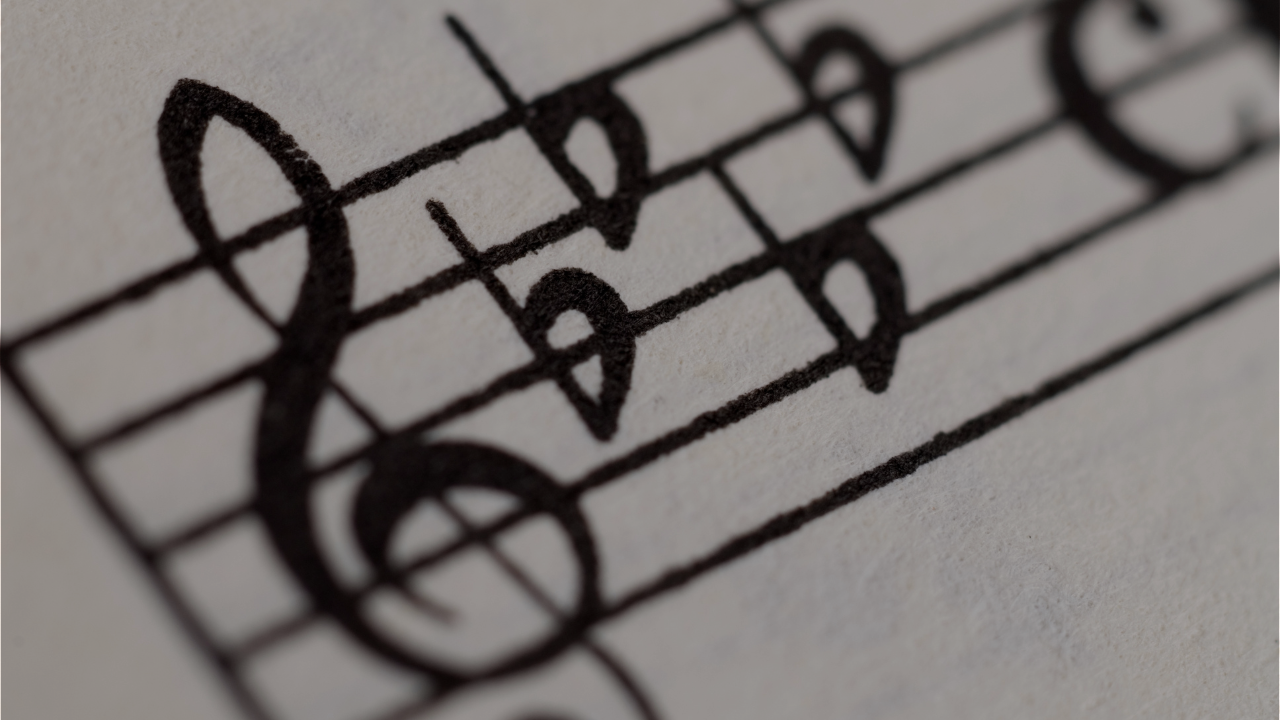
A scale is a sequence of notes arranged in a specific pattern of intervals (aka the distances between notes). The most familiar in Western music are the major and minor scales, each built from seven notes drawn from the twelve available. A key, on the other hand, is simply which note you begin on. The key of C major uses the notes C, D, E, F, G, A, B. The key of G major uses G, A, B, C, D, E, F#. The notes are different, but the pattern of relationships between them (ie the distances, the intervals) is identical. For sound healers, understanding keys matters because it is what determines whether instruments will sound harmonious together, so important when choosing your set. A crystal bowl tuned to C and one tuned to G are in the same key family — they share a natural harmonic relationship and will blend beautifully. A bowl tuned to C and one tuned to C# are only a semitone apart (the closest possible interval) and will create tension rather than resolution. Tension certainly has a place in sound healing, too! But perhaps we can explore that in another blog post ;) Neither is wrong. But knowing which is which means you can choose based on your specific intention for your instruments and your particular artistic direction in your sound baths.
Intervals: The Relationship Between Notes
One of my teachers once said: if notes are the words of musical language, intervals are the grammar: the relationships between words that create meaning. An interval is simply the distance between two notes. Each of your crystal bowls, for example, has a note name — C, D, E, F, G, A, or B. The interval between any two bowls is simply the relationship between those two notes. You don't need to read music to work with this. In practice, most sound healers learn to recognize intervals by note name first, and by ear over time, until eventually the theory fades into the background and you can feel into how you tell your sonic story by the sequence and feeling of choosing interval playing
The note examples below illustrate each interval, but the same distance (and the same feeling!) applies regardless of which notes you start on. A perfect fifth, for example, sounds and feels the same whether you are playing C and G, or D and A, or any other pair that shares that relationship.
The Perfect Fifth e.g. C and G, D and A, E and B, F and C
One of the most universally resonant intervals in music: appearing in overtone series, in Gregorian chant, in the harmonic structure of bells and bowls across cultures and centuries. When two crystal bowls a fifth apart are played together, the effect is that ahh feeling in the brain … open, spacious and somehow complete to our mind. This is one of the most recommended starting points for beginners building a bowl set.The Octave: the same note name, one register higher or lower (e.g. C4 and C5)
The purest interval of all, the same note doubled in frequency as we discussed above. Playing two bowls an octave apart creates an almost seamless expansion of a single sound, like the same word spoken in two voices at once. Deeply harmonious and deeply grounding! My favorite example of this is my C bowl from the Meinl Sonic Energy Chakra collection and my C3 16” bowl.The Perfect Fourth e.g. C and F, G and C, D and G
These relationships have a quality of openness and gentle suspension, I like to think of this as that slight moment we retain an inhale before a long, deep exhalation in a pranayam (breath) practice. Beautiful for moments of transition in a session, when you want to create movement without full resolution (resolution, as one of many examples in a sound bath session, could be resolving the sound before switching from one instrument to the next)The Minor Third e.g. C and Eb, A and C, E and G
This relationship is softer and more inward. The minor third is often described in music to have a bittersweet feeling … in this sense, we can perhaps use this musical understanding to create sounds that might evoke grief, longing, contemplation or memories from our listeners.The Major Third e.g. C and E, G and B, D and F#
Major thirds may feel bright, warm, and expansive. These relationships feel more resolved and uplifting than the minor third. Bright, happy and tingling! As an example, when I play major third notes with my G Major Meditation Flor Chime near the end of a session, I’ve had one student they felt such a surge of happiness come on, that they felt like laughing!
On a more practical note, the best way to start learning intervals is simply to play your bowls in pairs and listen. Notice what each combination does to your own body/mind system. Over time the ear becomes your most reliable guide! The theory names what you are already beginning to feel in your body. Understanding these relationships means you can make conscious choices about which bowls you play together, in what order, and at what moment in a session, building and releasing tension, moving from depth to lightness, guiding the listener through an arc of experience.
The Pentatonic Scale
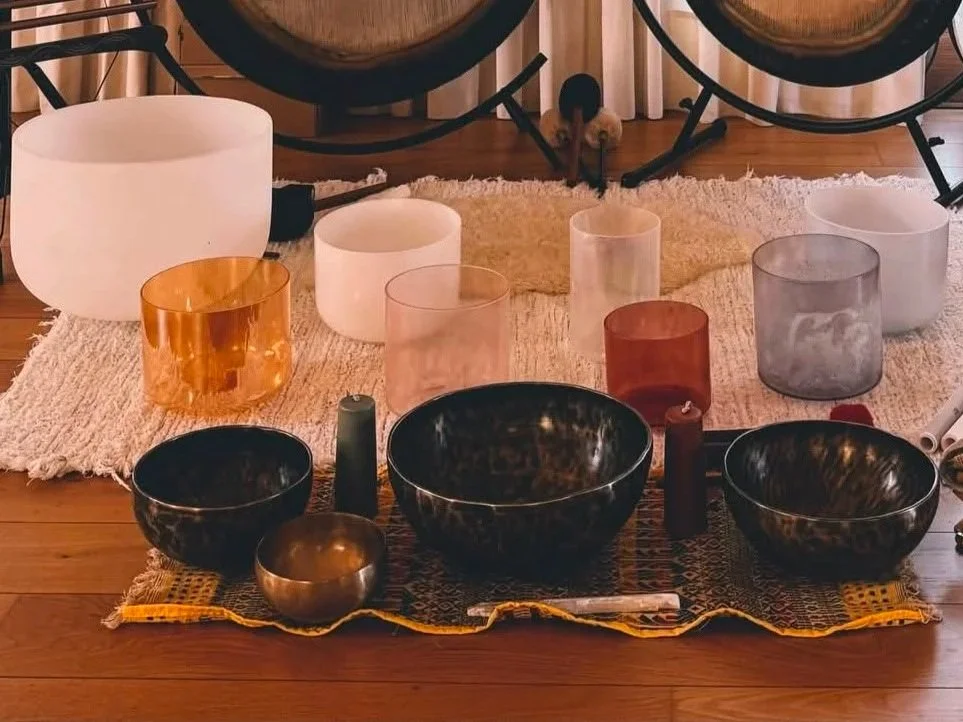
The pentatonic scale is one of the most important scales for sound healers to know — and one of the most instinctively pleasing to the human ear. It uses only five notes (hence penta — five) from the standard seven-note scale. In the key of C, the pentatonic scale uses: C, D, E, G, A. What makes it remarkable is what it leaves out: the two notes that create the most tension in a major scale. What remains are only the notes that feel naturally harmonious with each other, from almost any combination or order.
For sound healers, a set of instruments tuned to a pentatonic scale is one of the most forgiving and naturally beautiful combinations available. It is very difficult to play something that sounds discordant, which creates spaciousness for intuitive play — for following impulse and feeling without the risk of creating jarring harmonic clashes. Many crystal bowl sets are deliberately tuned to a pentatonic scale for exactly this reason.playing the gong is not hitting an object. It is beginning a conversation with a living instrument.
Harmony, Chord Relationships & Rhythm
A chord is three or more notes played simultaneously. In sound healing, we rarely think in chords explicitly, but whenever two or more instruments sound at the same time, they are creating harmonic relationships whether we intend them to or not. The most fundamental chord relationship to understand is the tonic and the dominant — the I and the V in any key. In C major, this is C (tonic) and G (dominant). The tonic feels like home, resolved, stable, complete, and the dominant creates tension, a feeling of reaching toward resolution. Moving between these two creates the most basic harmonic arc in music: departure and return, tension and release.
In a sound healing context, this plays out in how you sequence your instruments. Beginning with the tonic, moving toward the dominant, and returning to the tonic mirrors a journey and the body and nervous system feel that arc at a level beneath conscious thought. Sound healing tends to emphasize sustained, non-rhythmic sound (remember this is one of the key ingredients in brain entrainment!) the long drone of a bowl and the slow “decay” as we say, of the gong. With this, however, rhythm is always present in how often we strike and cycle through our instruments. Our body is fundamentally rhythmic. … heart beating, breath cycles, the rhythmic cycling of our brain waves and electrical activity. In sound healing, when the rhythm of sound aligns with the natural rhythms of the body (or gently guides them toward a slower, more coherent pace) true relaxation and healing happens for our attendees. One of the ways I like to understand rhythm, not just in the classic sense, but understanding it in how we use silence … the space between sounds is not empty and it is actually where our previous sound lands, integrates, and resolves.
None of this is meant to make your practice more cerebral. The goal is the opposite! When the musical language is understood (ie when we know why a fifth feels like it does in our bodies, for example), this knowledge can seep into our instinct and intuition. As my teacher said, the theory becomes the ground from which genuine intuition can take flight.
The most profound sound healing sessions are not random nor just intuitive. They are the meeting of deep knowledge and full presence, a practitioner who understands the language of their instruments so well that they can speak it freely, in the moment, in service of the people in the room.
Go Deeper
In my Sound Healing Trainings in Mallorca, we cover foundational music theory in addition to the vast world of sound healing, Nada Yoga and tons of hands-on time with instruments. We explore these concepts not as abstract ideas but as lived, embodied understanding through playing, listening and learning to hear the relationships between sounds in real time.
If you feel called to move from intuitive exploration into genuine mastery of this work, I would love to have you there.
